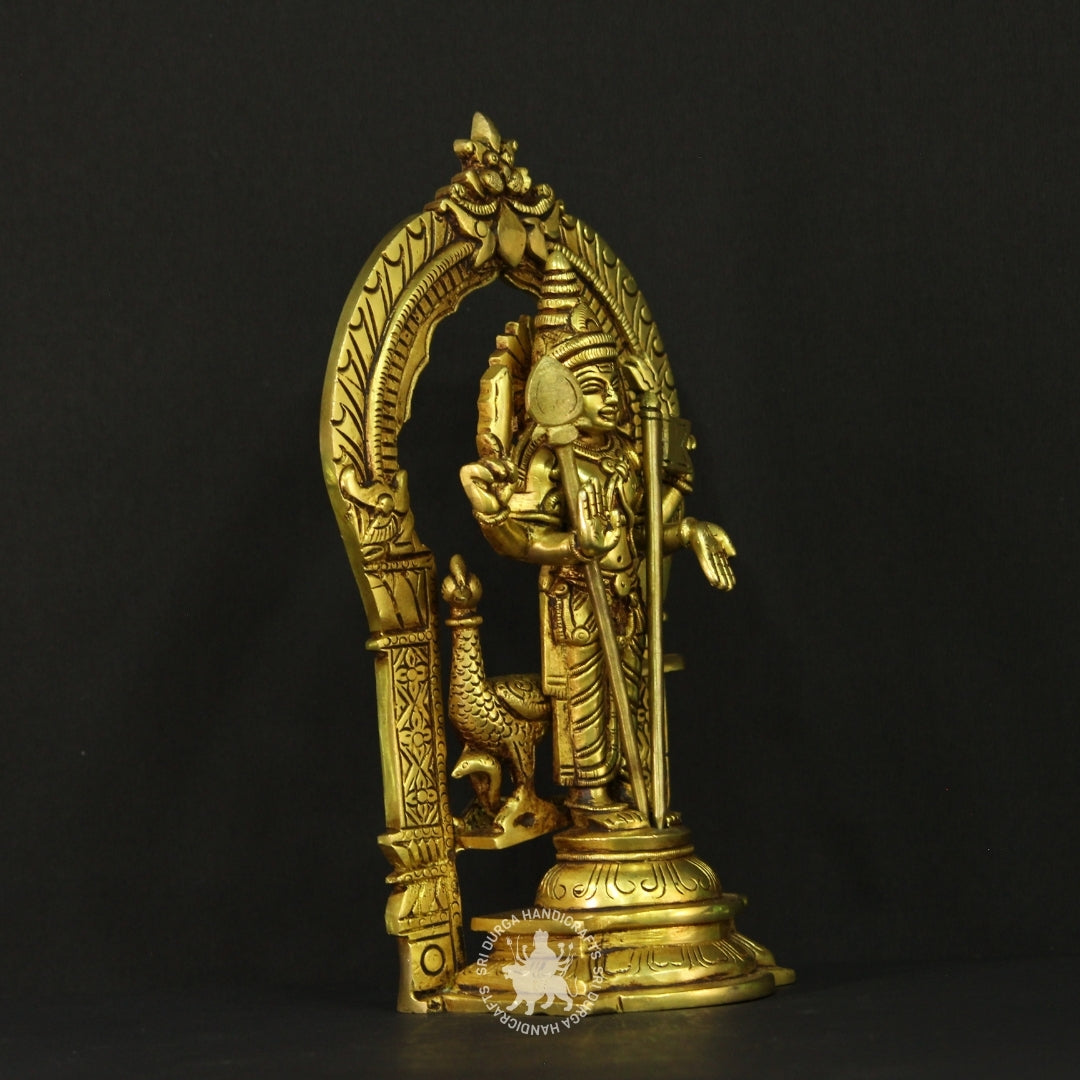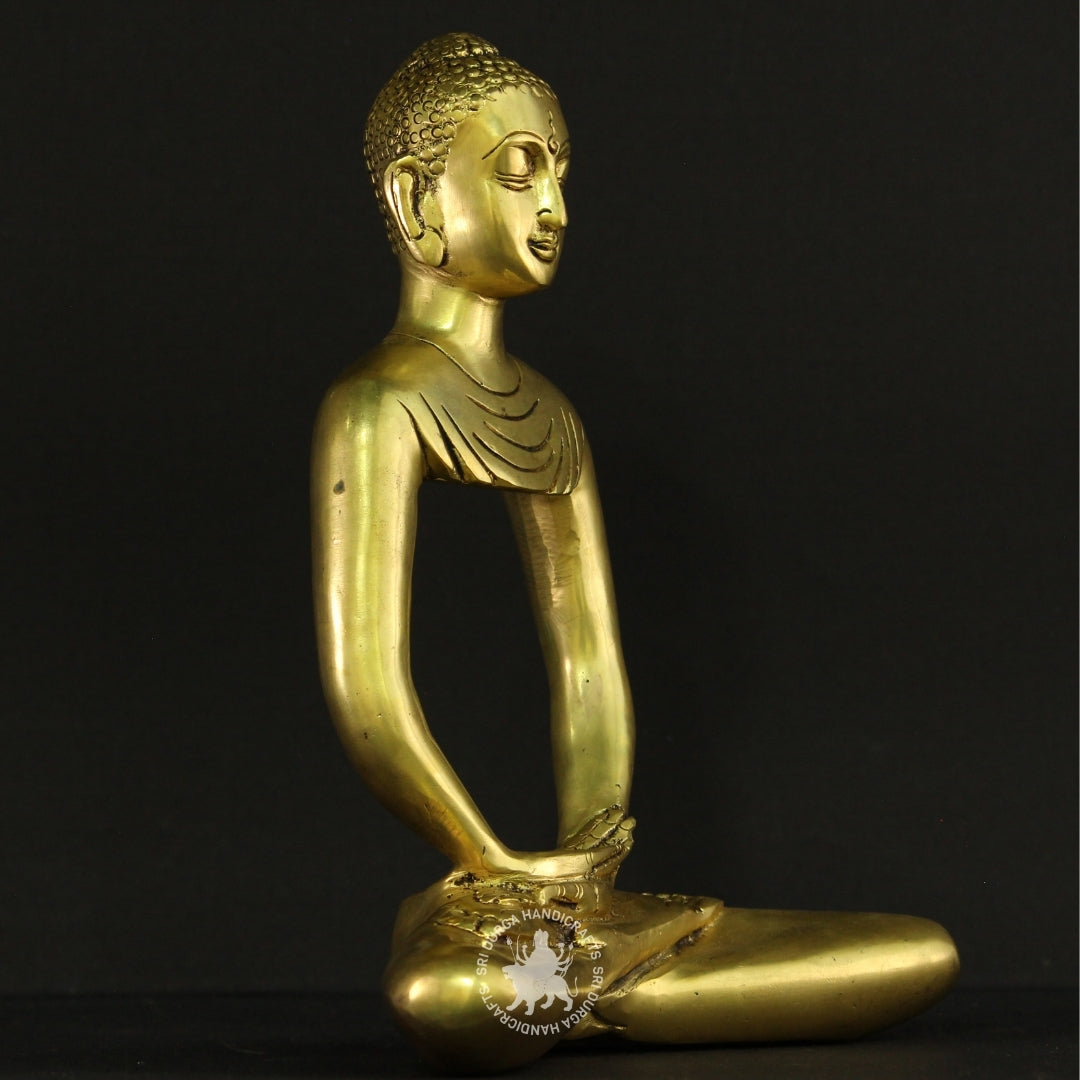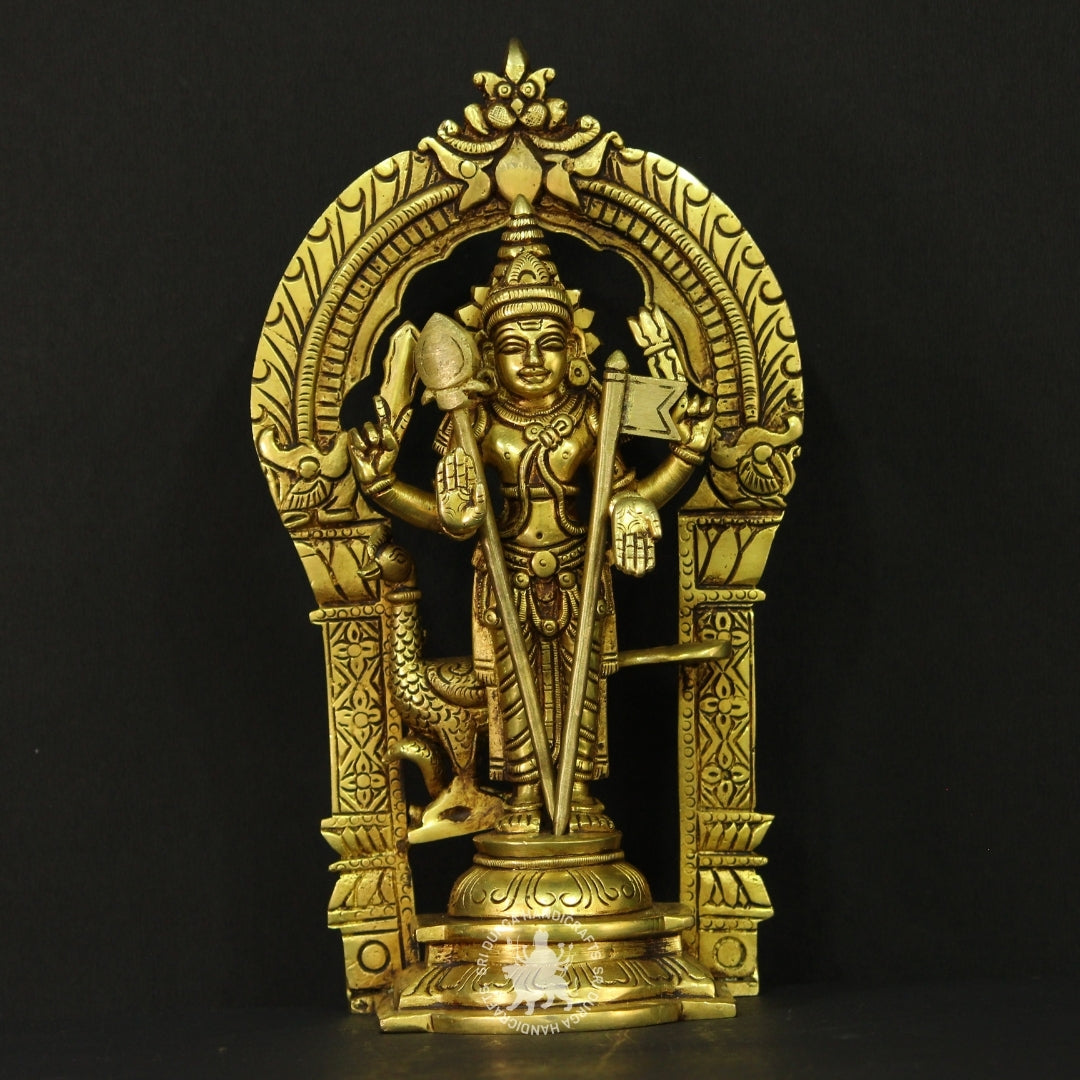

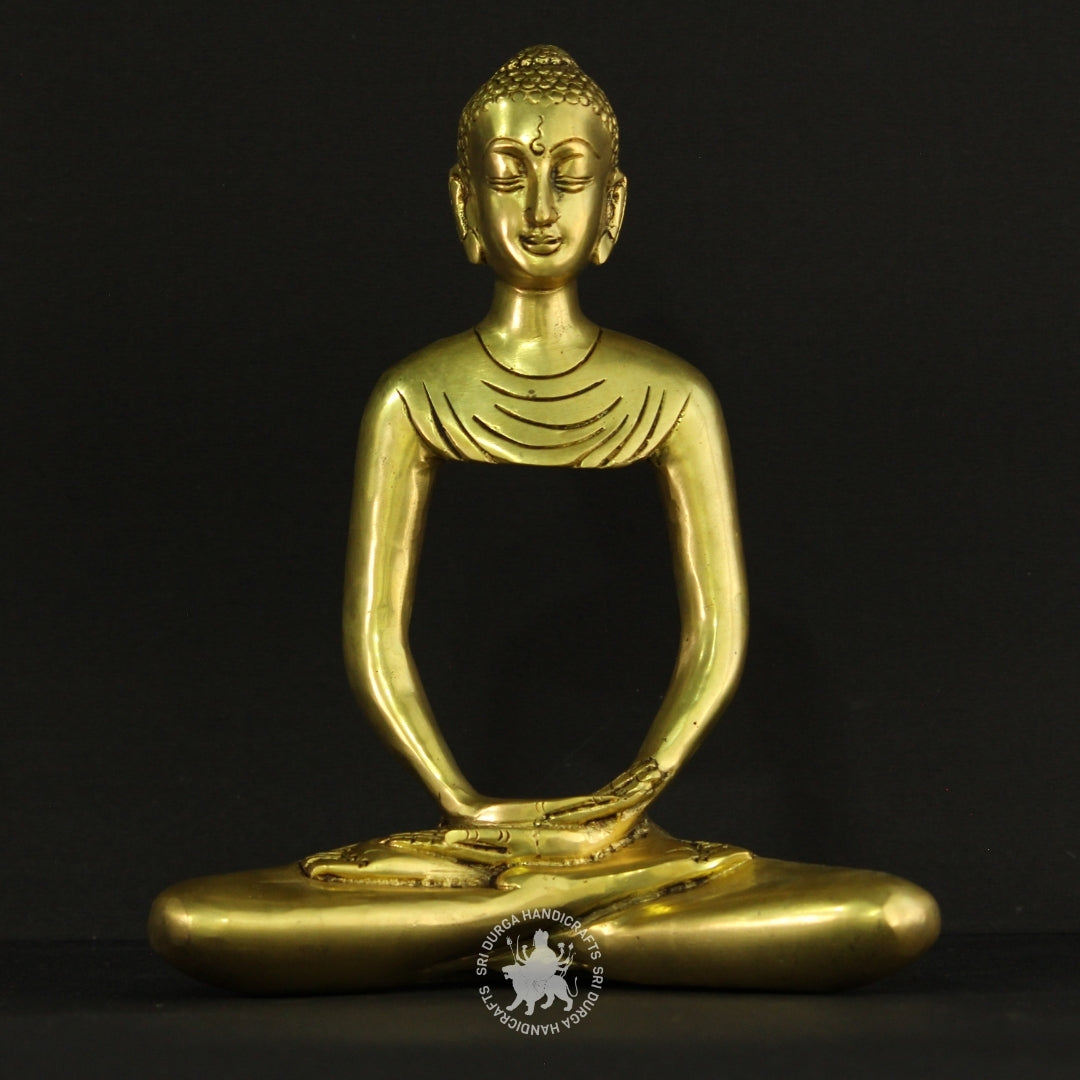

There is a spot in our courtyard, just to the left of the tulsi plant, where the morning sun lands first. That is where our Komatha idol sits. She has sat there for as long as I can remember, through three monsoons that flooded the front step, through a coat of fresh limewash on the walls every Deepavali, through the years my grandmother lit the lamp before her at dawn and, later, the years my mother took over that duty without either of us ever discussing it. Nobody decided Komatha would live in that corner. She simply belongs there, the way certain things in old houses belong to their places without anyone remembering how it started.
If you grew up in a Tamil or Telugu household, you already know Komatha. She is Kamadhenu, the wish-fulfilling cow, often shown with a calf at her feet, sometimes with a woman's face, sometimes with wings tucked at her sides, always with that particular calm that only sacred cows in bronze and brass seem to carry. She is not just an idol of a cow, she is the idea that the cow itself is divine, that ordinary nourishment, milk, ghee, the quiet act of feeding another being, is itself a form of worship. In our house, she was never explained to me in one sitting. I absorbed her the way you absorb most things about faith when you're young, in fragments, over years, mostly through watching what the adults around you did without being told to.
Why Sacred Animals at All
I used to wonder, as a child, why our gods came with so much company. Shiva has Nandi. Vishnu has Garuda. Durga has her lion, Saraswati her swan, Ganesha his little mouse who somehow carries an elephant-headed god without complaint. Even Ayyanar has his horses standing guard at the edge of the village. It felt, at first, like decoration, a story detail, nothing more.
It took me a long time, and a lot of conversations with the artisans who still hand-cast these figures the old way, to understand that the animal was never decoration. In most of these stories, the animal carries something the deity alone cannot express. Nandi is devotion so total it becomes stillness. Garuda is speed and fearlessness in service of something larger than itself. The cow, Komatha, is generosity that asks for nothing back. These are not side characters. They are the qualities of the divine, given a body you can actually look at and understand without needing a verse explained to you.
That is probably why homes across South India keep a Komatha, or a Nandi, or a small brass peacock near the lamp, even in families that otherwise keep their pooja room fairly simple. You don't need a full pantheon on your shelf. You need the one figure that reminds you, every single morning when you light the lamp, of the quality you're trying to practice that day.
Why It Had to Be Brass

Our Komatha is brass, not because that was the only choice available to my family, but because it was the only choice that made sense once you understand what brass actually does over time.
Clay idols are beautiful, but they are meant to dissolve, that is their entire purpose, especially during festivals. Wood carries its own warmth, but it dries, cracks, and needs a kind of care most busy households cannot give consistently. Stone is permanent but heavy, cold, and difficult to bring into a small courtyard corner or a home altar. Brass sits in the middle of all this. It is an alloy, copper and zinc, sometimes with small variations depending on the region and the artisan's own formula, and that in-between nature is exactly its strength. It is durable enough to survive being handled during every pooja, every abhishekam, every time a child reaches up out of curiosity to touch the calf at Komatha's feet. And unlike stone, it responds to touch. It warms slightly. It develops a patina. It ages the way a person does, not the way an object does.
There is also something the older artisans in Tamil Nadu still talk about, almost in passing, as if it's common knowledge rather than something worth remarking on: brass, in temple and household tradition, has always been considered a suddha dhatu, a pure metal, safe to use for both worship and daily utensils, resistant to the kind of decay that made other materials unsuitable for anything meant to last generations. That's part of why you'll find brass not just in idols but in the lamps, the kalasams, the bells, the water vessels used across most South Indian pooja rooms. It isn't a coincidence that the metal used for the lamp is the same metal used for the deity it illuminates.
And then there's the sound. If you've ever struck a brass bell or run a cloth over a brass idol during cleaning, you know the particular resonance it holds, a low, steady hum that stone and clay simply cannot produce. In a tradition where sound itself is considered sacred, where a temple bell is rung specifically to focus the mind before darshan, that resonance matters more than it might seem to from the outside.
What Makes a Brass Idol Last a Lifetime
Our Komatha has darkened slightly over the decades in the way that untouched brass corners sometimes do, but the detailing on her, the folds near her neck, the small calf pressed against her, the base she stands on, is as sharp today as it was in the photographs from my parents' wedding, when she sat in a different courtyard in a different house.
That is the real argument for brass, beyond tradition and beyond symbolism. It survives. A well-cast brass idol, cleaned with nothing more elaborate than tamarind paste or a mild brass polish every so often, will outlive the person who bought it. It gets handed down, not out of obligation, but because nobody wants to let it go. Ours will go to my daughter one day, the same way it came to me, without ceremony, just quietly finding its place in whichever courtyard she eventually has.
The Idols We Make
At Sri Durga Handicrafts, this is really the whole philosophy behind what we do. Every Komatha, every Nandi, every brass peacock or swan or elephant that leaves our workshop is cast the traditional way, by hand, by artisans who learned this from someone before them who also learned it from someone before that. We're not trying to make idols that look good in a photograph for a week. We're trying to make the ones that end up in a courtyard corner for forty years, that get quietly polished before every festival, that a grandchild eventually inherits without quite knowing why it matters so much to them, only that it does.
If you're looking for a Komatha of your own, or a Nandi, or any of the sacred animal idols that have held a place in Indian homes for generations, take a look through our brass collection. Somewhere in there is probably the one that's going to sit in your courtyard for the next fifty years.