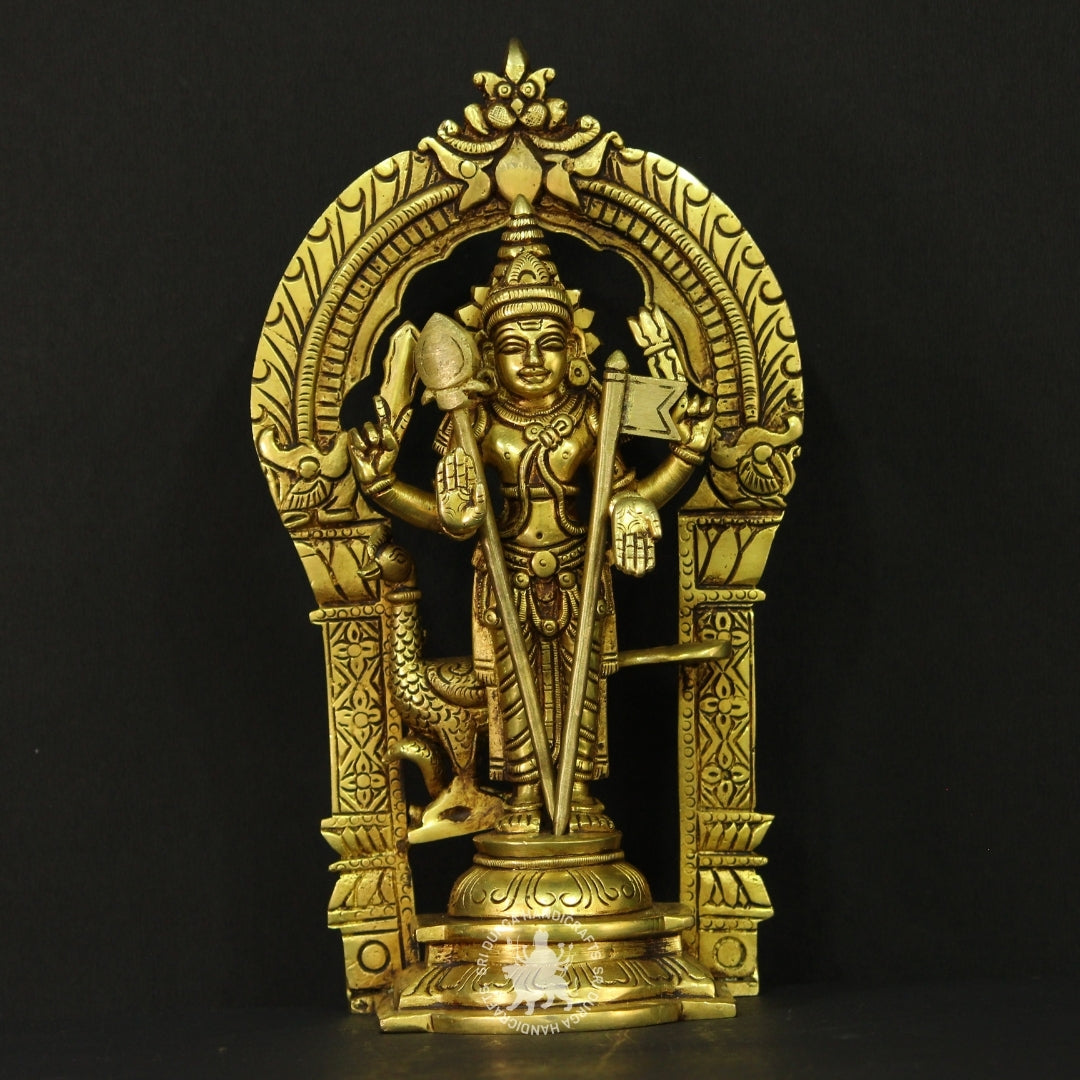


There's a certain kind of quiet that settles into a home once a Durga Amman brass idol takes its place in the pooja room. It's hard to explain unless you've felt it yourself: that sense of being watched over, of walls that suddenly feel a little thicker, a little safer. I noticed this the first time I helped my aunt set up a small brass Durga statue in her new apartment. She'd just moved in, alone, after decades of living with a joint family, and she was nervous about the empty corners of the place. Within a week of placing the idol, she told me the house didn't feel empty anymore. It felt guarded.
That's the strange, almost magnetic pull of Durga Amman as a deity; she isn't the goddess you pray to for soft blessings. She's the one you call on when you need a wall built around your family, your finances, your peace of mind. And there's something about seeing her rendered in brass, that warm, weighty, unmistakably ancient metal, that makes the whole idea of protection feel physical instead of abstract.

Why Brass, Specifically?
If you've ever held a brass idol, you know it doesn't feel like an ornament. It has heft. It has a history. Brass has been used in Indian temple art and home worship for centuries, not because it was the prettiest option, but because it lasts. It doesn't crack like plaster, it doesn't fade like paint, and with a little care, it actually gets more beautiful with age, developing a rich, almost golden-brown patina that no factory finish can replicate.
There's also a belief, passed down in a lot of South Indian households, that brass has protective properties of its own, separate from whatever deity is cast in it. Combine that with Durga Amman, a goddess whose entire mythology is built around slaying threats that "no one else could handle," and you get an idol that feels doubly armored. It's not just a symbol of protection. In brass, it almost feels like protection with a physical presence in the room.
The Symbolism Behind Her Fierce Form
Most people picture Durga riding her lion or tiger, weapons in her many hands, calm-faced even in the middle of battle. That calmness is the part people underestimate. It's not aggression that defines her; it's composure under pressure. A Durga Amman idol placed at the entrance or in the pooja room isn't meant to invite conflict into the home; it's meant to remind everyone who lives there that whatever comes to the door, the household has already got someone standing guard.
I think that's why so many families choose to place her idol facing the main entrance, or somewhere visible from it. It's less superstition and more a kind of psychological anchor; you walk into your house, and you're reminded, every single day, that this space is claimed, watched, and protected.
Where to Place a Brass Durga Amman Idol at Home
There's no single rulebook here; different families, regions, and traditions have their own preferences, but a few placements come up again and again:
-
Near the entrance or facing the main door, so she's seen as the first "presence" in the home
-
In the pooja room, ideally at eye level or slightly above, never on the floor
-
Facing east or north, directions traditionally considered auspicious for deities
-
Away from bathrooms or cluttered storage areas, since the space around her is thought to reflect the respect given to her
What matters more than precision, honestly, is intention. A brass Durga idol placed with care and cleaned regularly holds far more presence than one shoved into a random shelf just to check a box.
Caring for a Brass Idol Without Stripping Its Character
One thing people get wrong with brass idols is over-polishing them. Brass is meant to develop a bit of a matte, aged glow over time, that's part of its charm. A gentle wipe with a soft cloth, occasional cleaning with a mild brass polish (nothing harsh or acidic), and keeping her away from excess moisture is usually enough. Some families like to apply a thin layer of oil during festivals to bring back the shine for special occasions, then let it settle back into its natural tone afterward.
If you inherited an old Durga Amman brass statue from a grandmother or relative, resist the urge to make it look "new" again. That worn, slightly darkened brass often carries more meaning than a shiny replacement ever could.
A Presence, Not Just a Piece
What draws people to a Durga Amman brass idol isn't really about religion in the narrow sense; even people who aren't especially devout often say the same thing: the house just feels different once she's there. Stronger. Steadier. Like something invisible has taken up residence in the corner of the room and decided this family is under its care.
Maybe that's the real reason these idols have survived generations, moving from grandmother's shelf to mother's shelf to a daughter's new apartment across the country. It's not really about the metal or the craftsmanship, even though both matter. It's about what the idol represents the moment you walk through your own front door, a home that feels like no one can touch it.